PPM Surveys
Leases, Service Charge, Property Management
“A stitch in time saves nine…”
A Planned Preventative Maintenance (PPM) survey is used when managing a property to pre-emptively avoid significant defects manifesting, instead following a more manageable scheme of preventative maintenance.
The PPM Survey
A PPM Survey is commissioned to ensure that a property and its associated systems are maintained in good working condition over a specific time. Generally, PPM Surveys cover a time period of between 5 and 20 years.
The Building Surveyor’s report is intended to identify potential defects and issues early, help streamline and prepare remedial work and budgeting, and ensure the property meets compliance requirements.
A PPM will be required by a wide range of property owners, including commercial and residential landlords, property and asset managers, and public sector organisations.
A PPM helps prevent unexpected repair costs, but also can be used to set service charge budgets and plans, ensuring all parties (Landlords, Tenants, Property Managers, etc.) are best aware of any costs which they may be responsible for in the future.
HVAC – Heating, Ventilation and Air Conditioning
The Process
Firstly, the Building Surveyor will undertake a detailed review of relevant documentation to ascertain the exact extent of the property the PPM should apply to.
They will then survey the property, both externally and internally as required, using a methodical, formulaic approach to ensure all relevant elements are captured. The survey may include a Building Services Engineer to review the HVAC* systems, lighting, lifts, plumbing and electrics.
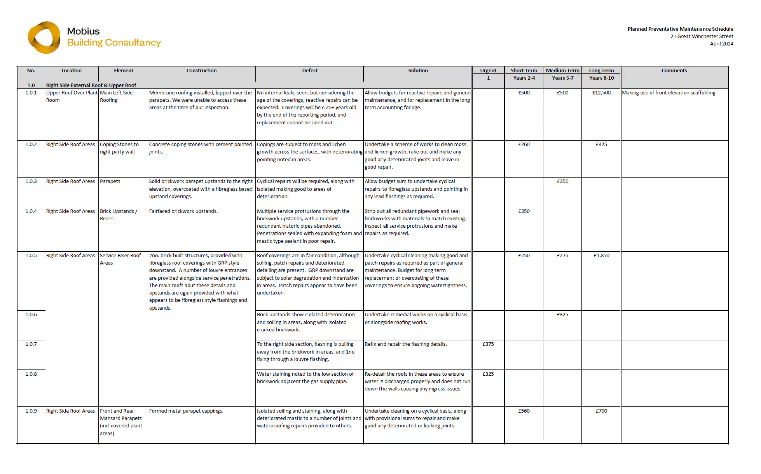
The surveyor will then produce a written document, outlining the likely maintenance and cost requirements for the property over the specified timeframe.
The Outcome
The outcome of the process is that the Landlord/Property Manager has a detailed plan for ensuring the property remains in good condition, and that high and unexpected repair bills are avoided.